


Solace

Startup Grant Recipient

Hackathon 1st Place Winner
An AI companion app for emotional clarity.
Solace is a private AI companion for chatting, practicing difficult conversations, tracking moods, and reflecting over time. I co-founded Solace and led the product design and front-end development from initial concept through launch.
Problem
Most AI chat apps feel generic and forgettable. How can we create a companion that understands users over time and helps them turn everyday conversations into meaningful insight?
Outcome
I led product design and front-end development across 60+ app screens and the website, including its voice-to-voice framework.
My role
Co-founder & Product Design Engineer
Timeline
May 2025 - Present
Team
- Sarah Mou
- Kelly Zeng
- Lauren Lee
Tools
- Figma
- Midjourney
- Cursor
- Claude
- ElevenLabs
Background
While AI is most commonly used for productivity, we noticed a unique behavior in the people around us: they were turning to it to talk through personal problems and ask for advice. That behavior is what led us to build Solace at the Virtuals Protocol hackathon, ultimately winning us 1st place and a 50k prize.
We kept building after the hackathon, growing Solace into an AI-powered wellness experience. It's now backed by the ElevenLabs Creator Grants program, with a community of more than 5,000 followers.
Features
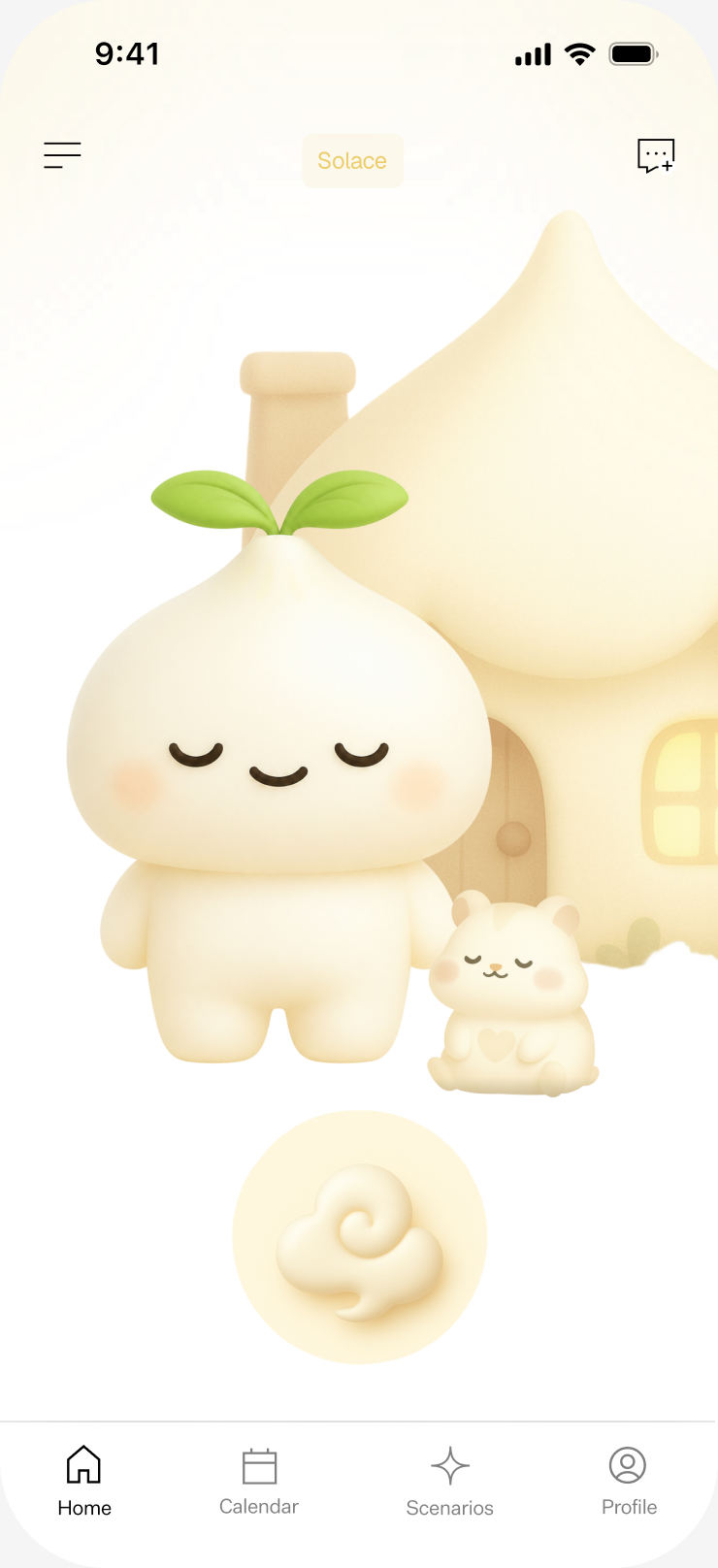
Home companion page
Talking to AI can feel transactional and disconnected across conversations. We created a persistent companion that remembers context and supports natural chat and voice conversations in one place.
Onboarding flow
I designed a guided onboarding experience that introduces Solace through a personalized conversation and quickly shows users how it can help.
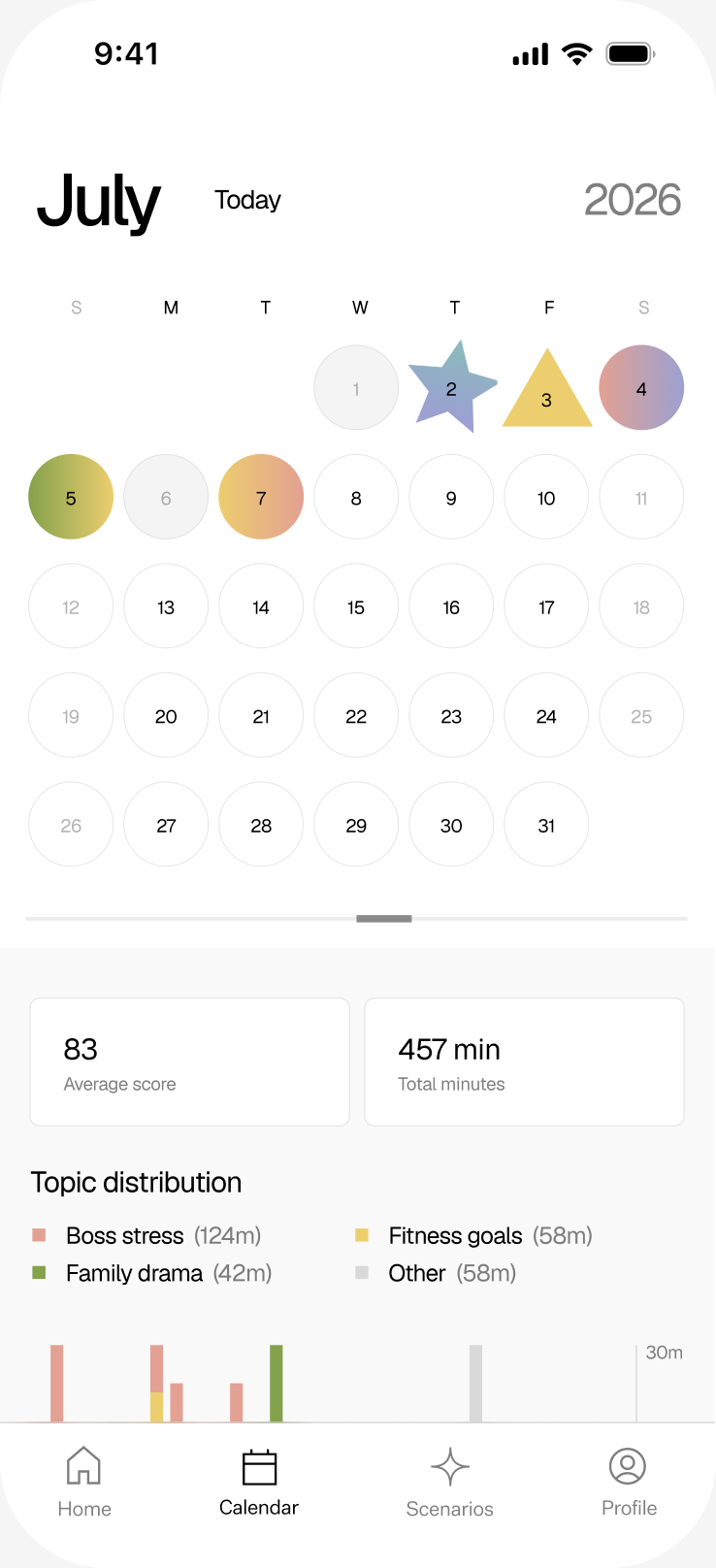
Calendar view
Mood patterns are difficult to notice when they remain buried inside individual conversations. We added a calendar view that organizes moods and reflections over time, making patterns and changes easier to understand.
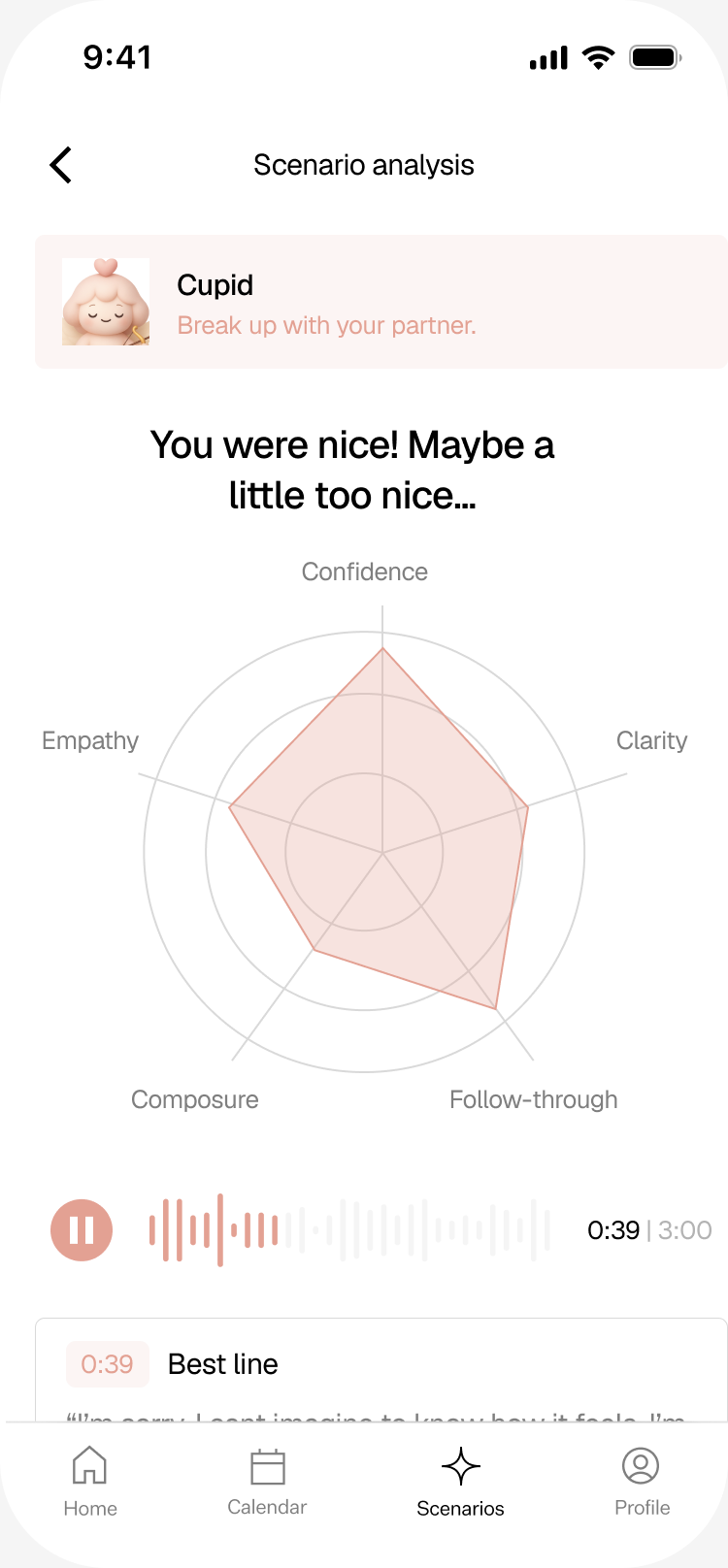
Scenario Mode and analysis
Most AI conversations end with advice. We used AI more interactively by letting users rehearse real conversations with a responsive character, then receive personalized feedback on their communication patterns.
Profile / settings
AI companions require more personalization and control than a standard chat app. We created a central place for users to manage their companion, preferences, subscription, privacy, and account settings.
Reflection
Seeing Solace grow from an early concept into a real product with measurable impact was incredibly rewarding. Having full creative control was freeing but daunting, since I had to make decisions without always knowing the right answer. Over time, that pushed me to trust my own judgment as a designer.
Working at my own startup also taught me how important speed and detachment are. It's easy to get attached to a design after investing so much time in it, but user data doesn't care how much work went into something. Building with AI made testing and iteration faster, but the real lesson was prioritizing what users actually did over my own attachment to the work.