
Magnets [FigBuild 2026]
A mixed-reality tool that turns meaningful moments into a visual record of who you are becoming.
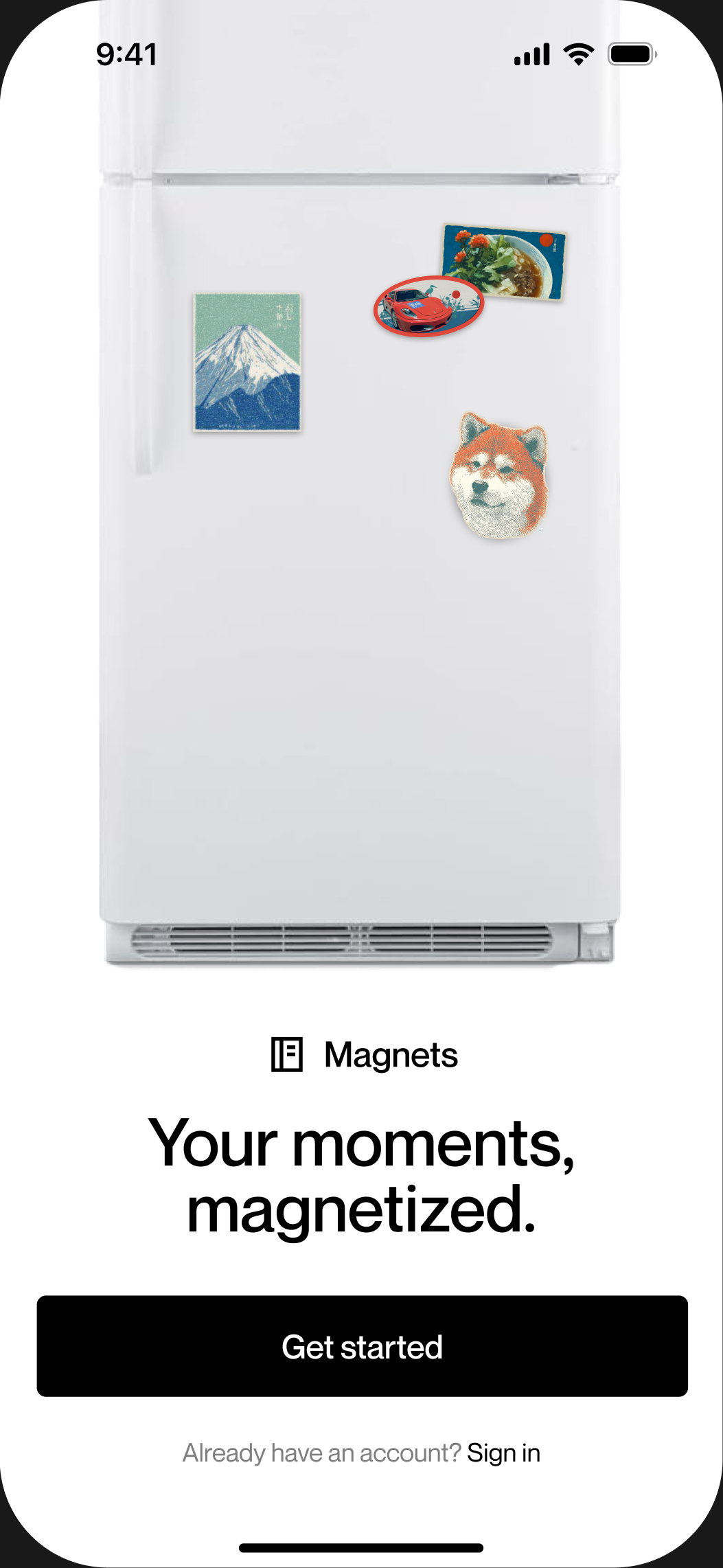
Magnets uses biometric wearables to detect personally resonant moments, then transforms them into illustrated keepsakes that users collect and arrange on a virtual fridge.
Problem
The everyday moments that shape our identity are often the easiest to forget. How might we capture these experiences without turning reflection into another social feed, journal, or habit to maintain?
Outcome
Our team designed an end-to-end prototype across wearables and mobile, including onboarding, passive moment detection, magnet creation, and a customizable virtual fridge. We prioritized user control, privacy, and reflection over scores, streaks, or social validation.
My role
Product Designer
Timeline
4 days, FigBuild 2026
Team
- Sarah Mou
- Joanna Ye
- Andrew Liu
- Julian Jung
Tools
- Figma
- Midjourney
- Cursor
- Claude
Background
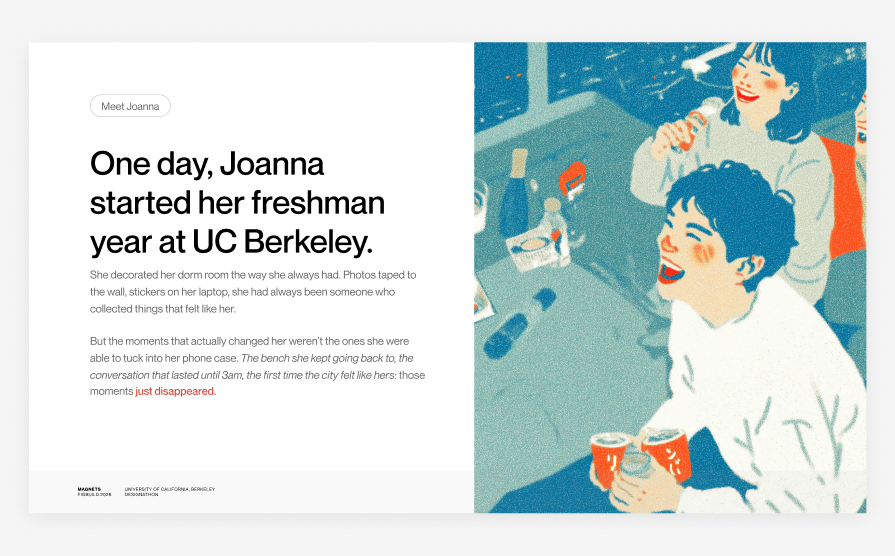
As UC Berkeley students, we realized that the most meaningful parts of college were often the hardest to preserve. You remember the major milestones, but not always the bench you returned to between classes, the conversation that lasted until 3 a.m., or the moment a new city began to feel like home.
We were all describing the same feeling: certain moments become part of who you are, yet there is no way to capture that connection before it fades. We called this identity resonance, and it became the foundation for Magnets.
Problem
Existing tools rely on people to actively document their lives, often through journaling or social media. This means the small, unplanned experiences shaping someone's identity can disappear without leaving a record.

Our guiding question:
How might we passively recognize and preserve the meaningful moments that quietly shape who someone is becoming over time?
Process
- Choosing the first user
The concept could apply to almost anyone, but designing for everyone made the experience feel abstract. We narrowed the initial use case to first-year college students, whose routines, relationships, and sense of belonging are all changing at once.
We grounded every decision in one specific student journey rather than a broad persona, helping the product feel coherent and emotionally real.
- Designing against another feed
The product could easily have become something users felt pressured to maintain or optimize. We deliberately removed scores, streaks, social sharing, recommendations, and endless content.
- Connecting the three surfaces
With the core concept and user defined, we structured the experience across three connected surfaces:
01 Wearables
Glasses and a wrist sensor capture biometric signals throughout the day
02 Mobile App
Users review a small number of detected moments and choose which ones to preserve
03 The Fridge
Users arrange illustrated magnets into a visual record of a specific chapter in their life
Final product
Home page
A living visual archive where users create different fridges for each chapter of their life, making it easier to see how the people, places, and everyday moments shaping them change over time.
Onboarding flow
Creating a new magnet
Users review a detected moment, personalize its details, and transform it into an illustrated keepsake.
Magnet view
A closer look at each preserved moment, including its image, context, date, location, and personal meaning.
Profile
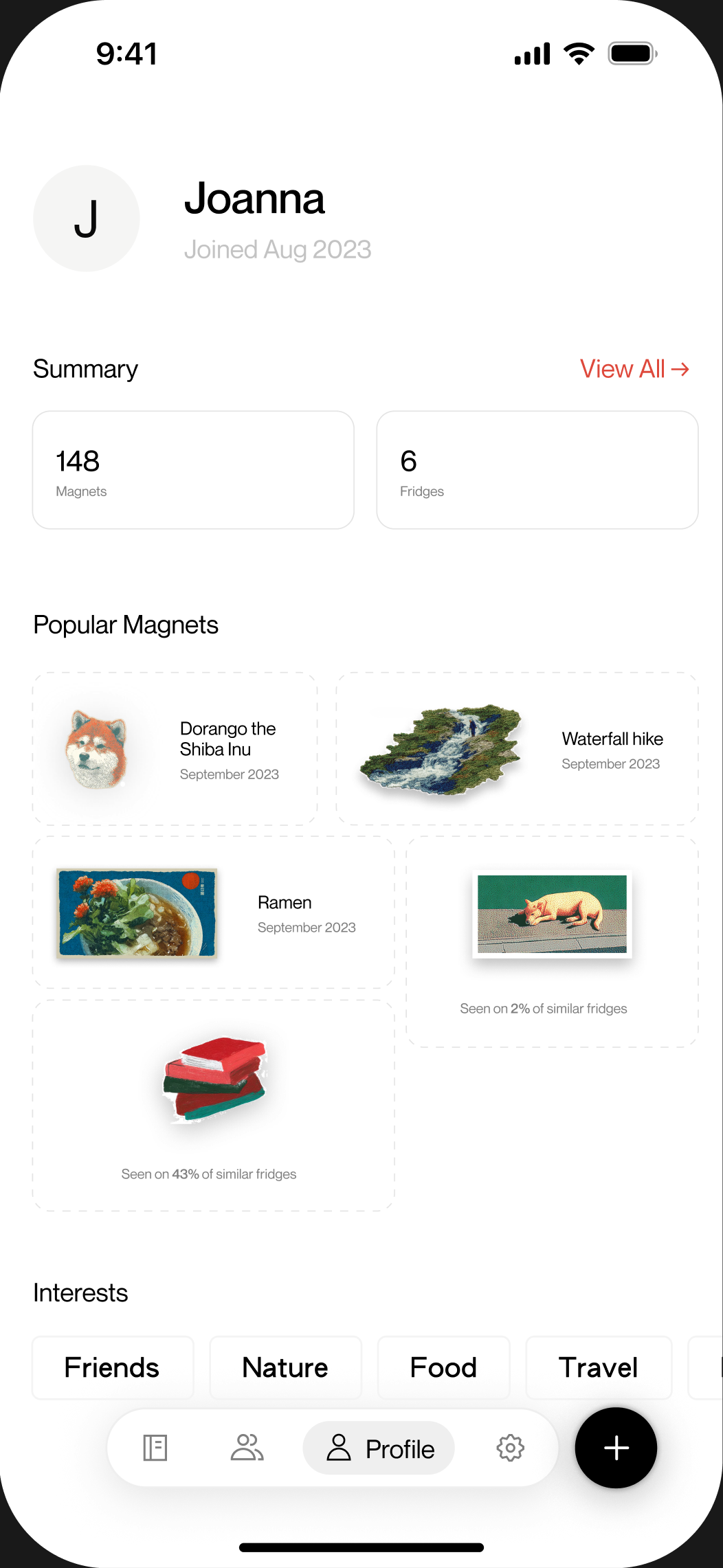
A place to view patterns across different fridges and see how the people, places, and experiences shaping you evolve across chapters of your life.
Impact
Although we didn't place, Magnets was recognized by a member of the Figma for Education team! However, outside of the designathon, we hope the project encourages conversation around how modern technology and social media shape connection, memory, and identity, and what digital experiences might look like if they were designed for reflection rather than performance.
Reflection
Grounding the problem in something I had personally experienced helped us identify a need that was difficult to articulate through assumptions alone. It made me value user interviews and lived experience more deeply, especially when designing for emotional or highly personal problems.
I also realized how many modern social platforms rely on dark patterns like streaks, metrics, feeds, and social validation; designing without them initially felt unfamiliar, but ultimately freeing. It pushed me to think more intentionally about what an interface should encourage—and what it should deliberately leave out.